Jacobs Syndrome 47,XYY enters the heart of international scientific debate
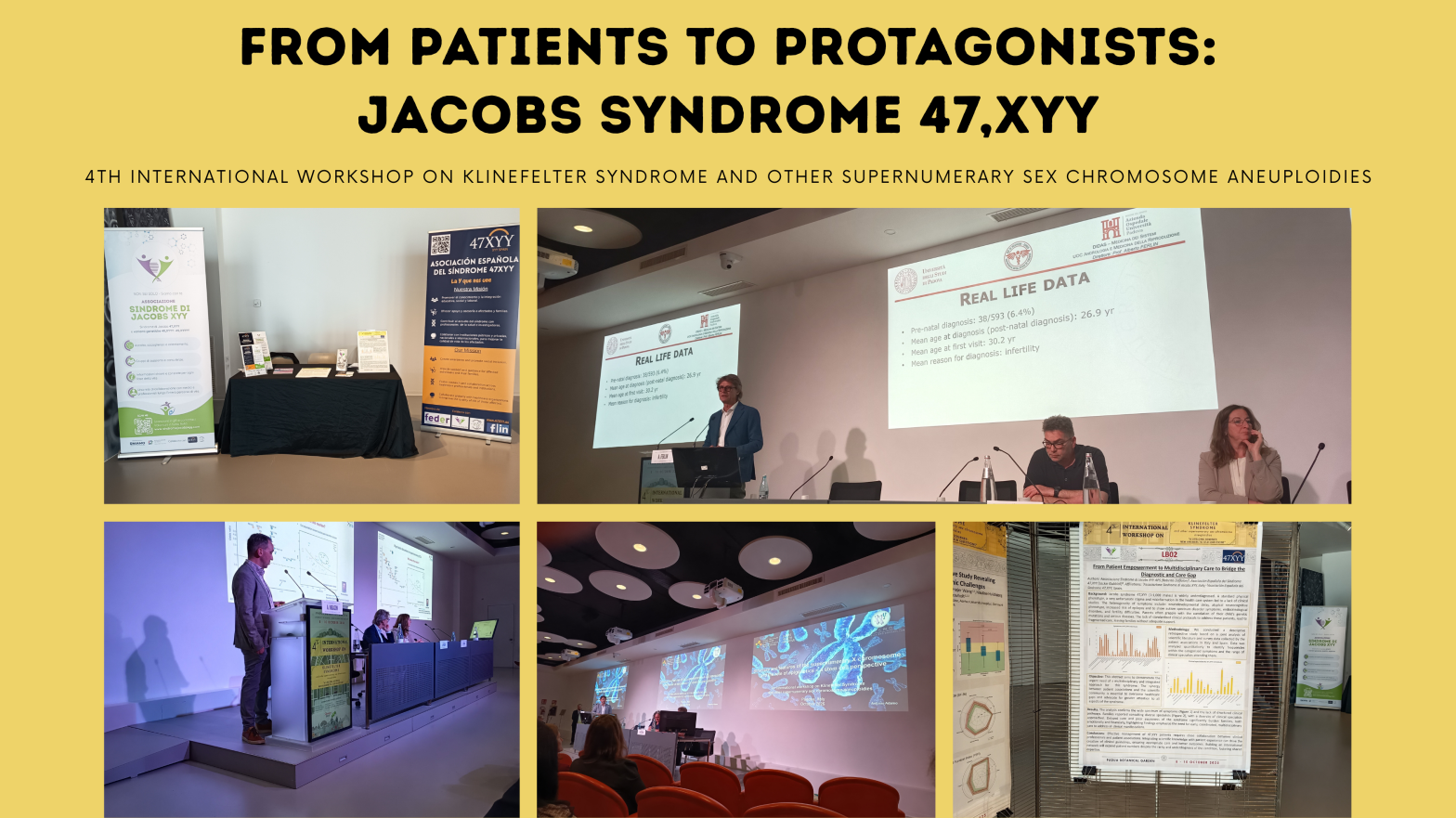
The Jacobs Syndrome Association XYY Italy APS and the Spanish Association of 47XYY Syndrome actively participated in the 4th International Workshop on Klinefelter Syndrome and other supernumerary sex chromosome aneuploidies, held in Padua from 8 to 10 October 2025. Under the thematic aegis “A LIFELONG JOURNEY: NEW ANSWERS TO OLD QUESTIONS”, the event provided a crucial scientific comparison, raising the focus towards the full spectrum of sex chromosome aneuploidies (SCA), including the Jacobs syndrome (47,XYY).
The joint presence at this forum of excellence was fundamental to compare the needs of patients 47,XYY with the most recent scientific acquisitions and to reaffirm the mission to promote greater research and international collaboration specific to our syndrome.
The Contribution of the Associations 47,XYY:
An Integrated Model of Care
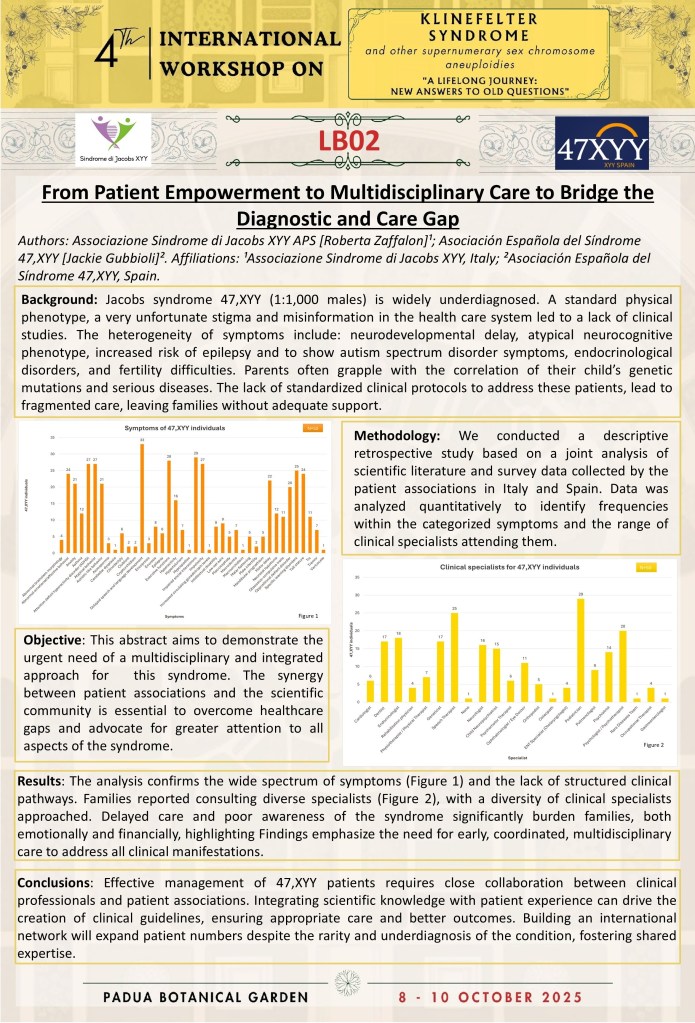
Our contribution culminated with the presentation of the joint research poster, entitled “From active patient involvement to multidisciplinary care to bridge the diagnostic and care gap”. This work has highlighted the persistent problem of underdiagnosis and fragmentation of treatment for 47,XYY, proposing the establishment of a specific Diagnostic Therapeutic Assistance Pathway (PDTA).
The survey integrated the perspective of patients investigated by the Italian and Spanish associations with scientific data that underline the need for lifelong monitoring.
Detailed Analysis of Interventions: The Focus on Jacobs Syndrome 47,XYY
The speakers’ speeches covered the entire life cycle of aneuploidies, offering multiple and direct implications for Jacobs Syndrome as well.
We now present the scientific interventions that, by cross-referencing research data with the needs of our patient community, we believe are of greater and immediate relevance for 47,XYY Syndrome and for the definition of a specific treatment model.
Genotype-Phenotype and Etiology Area
This session investigated the genetic and epigenetic mechanisms underlying SCA, with clear connections to 47,XYY Syndrome.

Dr. Antonio Adamo – The extra Y chromosome: cellular and epigenetic effects
A speech of particular relevance for Jacobs Syndrome was that of Dr. Antonio Adamo (Saudi Arabia). With his report Structure and features of the supernumerary X chromosome and the role of epigenetics – a stem cell perspective, he conducted a fundamental study that shifts the focus from the simple presence of an extra sex chromosome to its real impact on cell functioning.
The Turning Point for Jacobs Syndrome 47,XYY:
Through the study of reprogrammed stem cells, i.e. human cells that can be “brought back” and observed as in the very first moments of development, Dr . Antonio Adamo’s group has discovered something very important: in the case of Jacobs Syndrome (47,XYY), the extra Y chromosome does not remain passive, but interferes with the normal functioning of genes, A bit like a faulty switch that sends the wrong signals into the cell.
This interference changes the way genes are “read” and used, influencing processes that are fundamental for the proper development of brain cells. And what surprised the researchers is that this imbalance is not caused by classical epigenetic modifications, i.e. by chemical “labels” that normally regulate the activity of genes, but by an abnormal dialogue between the X and Y sex chromosomes.
In practice, the extra Y chromosome does not act alone, but creates a domino effect that also alters the behavior of other genes important for brain development.
This finding is of great importance because it shows that 47,XYY syndrome (Jacobs) and 47,XXY syndrome, although different, share similar cellular mechanisms that could explain some common traits, such as difficulties with language, learning or behavioral regulation.
Thanks to these results, we now have a clearer scientific basis for understanding what really happens in the cells of people with an extra Y chromosome; a fundamental step forward to develop targeted and personalized approaches in the future, capable of better supporting the development and well-being of people with Jacobs Syndrome (47,XYY).
📄 Reference:
Astro V, Cardona-Londoño KY, Cortés-Medina LV, et al. An iPSC-based model of 47,XYY Jacobs syndrome reveals a DNA methylation-independent transcriptional dysregulation shared with male X aneuploid cells. Genome Research. 2025. PMCID PMC12212075, PMID 40494628.
🔗 https://pubmed.ncbi.nlm.nih.gov/40494628/
Dr. Anne Skakkebæk – Transcriptome and epigenome: how X and Y dialogue in tissues
Another important contribution was that of Dr. Anne Skakkebæk (Denmark), who with her presentation The transcriptome and epigenome across different tissues analyzed how the abnormal number of sex chromosomes can modify gene activity and epigenetic regulation in different tissues of the body.
The results show that variations in the number of X and Y chromosomes affect gene expression in a complex way, with specific effects depending on the type of tissue. In addition, she highlighted cross-interactions between X and Y chromosome genes, which could help explain some of the biological similarities observed between different sex chromosome aneuploidies.
These mechanisms could contribute to the complex phenotypes found in these conditions, such as variations in development and behavior.
📄 Reference:
Johannsen EB, Just J, Viuff MH, et al. Front Genet. 2022; 🔗https://pubmed.ncbi.nlm.nih.gov/35938026/
Better Communication for Jacobs Syndrome (47,XYY)
The area of diagnosis and communication of diagnosis is of critical relevance, particularly for prenatal diagnoses of Jacobs Syndrome (47,XYY), which are often unexpected and managed with incomplete or outdated information. The talk by Dr. Susan Howell (USA), part of the eXtraordinarY Kids Clinic team with Dr. Tartaglia, entitled Genetic counselling in XXY, XYY and Trisomy X and parent perspectives, emphasized the need for radically informed, balanced and compassionate genetic counseling for all sex chromosome aneuploidies (SCA).
Dr. SSusan Howell – The Importance of Proper Genetic Counseling for Jacobs Syndrome 47,XYY
Dr. Howell pointed out that sex chromosome aneuploidies (ACS) are conditions characterized by high variability and uncertain prognosis. Focusing on Jacobs Syndrome (47,XYY), the way in which the diagnosis is communicated has a direct and lasting impact on family adjustment and, consequently, on the child’s developmental outcomes.
- Countering Negative Narratives: The study highlights how, especially in the prenatal context, parents often receive “dated and excessively negative” information that emphasizes risks (such as historical and incorrect association with severe behavioral problems or low IQ) at the expense of potential quality of life and opportunities for intervention.
- Balanced Prognosis: Counseling must provide a balanced prognosis, based on the latest prospective research (such as that of the Tartaglia/Howell team) which shows that children identified early and who receive early support (anticipatory guidance) often have better developmental outcomes, as parents are ready to intervene early on language and motor challenges.
- Parents’ Perspective:A key element is the integration of the parental perspective and peer support. Associations like ours (Jacobs Syndrome Association XYY Italy APSand theSpanish Association of 47XYY Syndrome) and its international counterparts play a key role in this, providing a real insight into life with 47,XYY, helping new parents overcome anxiety caused by ambiguity and diagnostic uncertainty.
Dr. Howell’s research provides practical recommendations on how, when, and what to communicate to parents and, later, to the child himself, to foster acceptance and empowerment.
Dr. Howell – Communicating the diagnosis to your child: guidelines for gradual communication
Dr. Howell is a co-author of foundational research that takes an in-depth look at parents’ experiences and concerns (regardless of diagnosis, including 47,XYY) about when they should communicate the diagnosis to their child. The study, titled “How should I tell my child?” Disclosing the diagnosis of sex chromosome aneuploidies (2015), identified major parenting anxieties (how to make the conversation age-appropriate and the impact on the child’s self-esteem) and provided the first practical recommendations for communication: be honest, gradual and talk about it before puberty.
📄 Reference:
Dennis A, Howell S, Cordeiro L, Tartaglia N
🔗https://pubmed.ncbi.nlm.nih.gov/25179748/
Neurocognitive, Behavioral and Developmental Area
This was the session of greatest direct interest for Jacobs Syndrome, given the high risk of neurodevelopmental disorders.

Dr. Hanna Swaab – Neurocognitive phenotypes in SCTs: executive functions and social skills
Dr. Hanna Swaab (The Netherlands) presented Neurodevelopmental phenotypes of children with sex chromosome trisomies, providing essential data on the impact of trisomies (XXX, XXY, XYY) on executive functions and social skills in children, highlighting the need for early and targeted interventions.
📄 Reference:
Kuiper KC, Swaab JT, Tartaglia N, et al. Genes Brain Behav. 2022
🔗 https://onlinelibrary.wiley.com/doi/abs/10.1111/gbb.12811
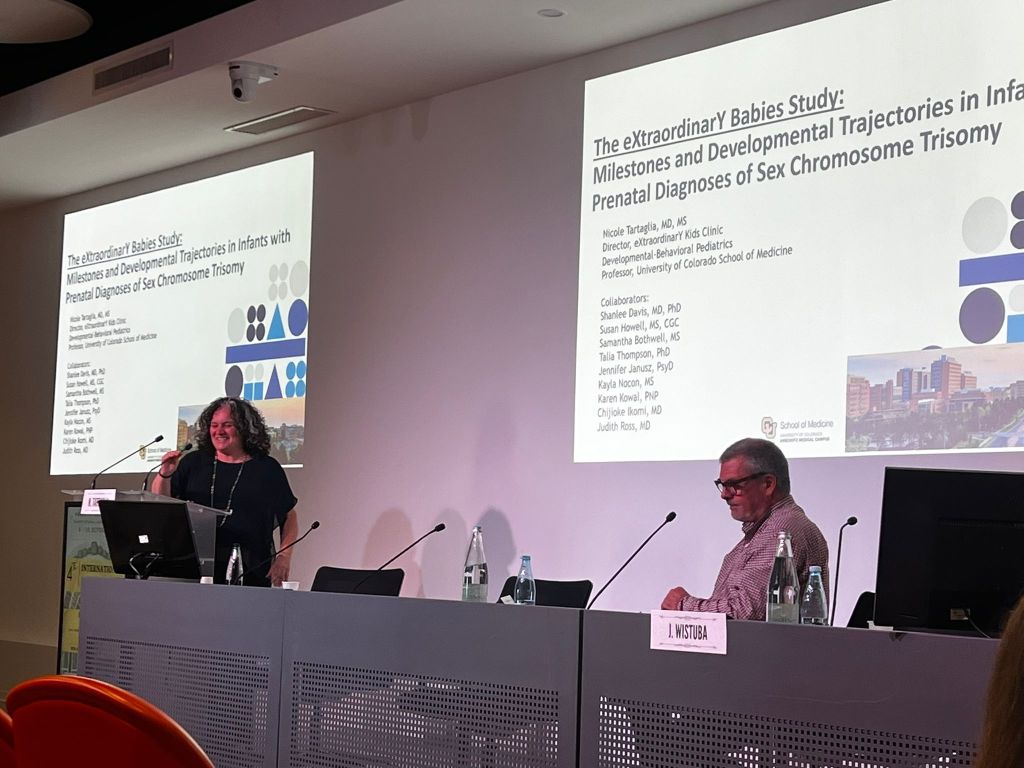
Dr. Nicole Tartaglia – The development roadmap: evolutionary steps for diagnosis and early intervention
Dr. Nicole Tartaglia is a pioneer in the clinic for sex chromosome aneuploidies. With his presentation Milestones and developmental trajectories in sex chromosome trisomies, he provided the practical tool to move from diagnosis to action.
The value of the “map” for 47.XYY:
His work consists of creating a “developmental map” or “roadmap” specifically for children with trisomies of the sex chromosomes, including Jacobs Syndrome. This map accurately traces developmental milestones, key moments when a child should achieve certain skills (such as starting to talk, walk, or interact socially).
For 47,XYY Syndrome, this mapping is critical because:
- Allows for Early Diagnosis: If a child does not reach the planned milestones in time, an alarm bell is activated that directs parents and pediatricians towards a timely genetic diagnosis.
- Guarantees targeted intervention: By knowing in advance the potential delays typical of the syndrome (often in language or motor coordination), it is possible to initiate therapies (speech therapy, psychomotor skills) at critical moments of development, maximizing effectiveness and drastically improving the long-term prognosis. Early diagnosis, as emphasized at the congress, is the first step to a successful life path.
Dr. Laura Zampini – Linguistic trajectories: from late talkers to developmental language disorder
Dr. Laura Zampini (University of Milano-Bicocca, Italy), with her presentation Trajectories of speech-language development in Klinefelter syndrome and other sex chromosome aneuploidies, brought to the workshop essential research data on the timing and nature of language and communication deficits in sex chromosome trisomies (SCTs), including Jacobs syndrome (47, XYY).

Key evidence for Jacobs syndrome 47,XYY:
Dr. Zampini and her team’s research focus on the early identification of “late talkers” within the population with sex chromosome trisomies (SCT). This work is crucial because it demonstrates that language difficulties begin much earlier than commonly assumed and that the delay affects not only expressive skills but the entire developmental trajectory underlying communicative competence.
- Early delay in communication: Studies indicate that a significant proportion of children with SCT have a vocabulary of fewer than 50 words at 24 months, identifying them as at risk for persistent speech disorders. For example, research conducted on 18-month-old children found that those with SCT exhibited significantly lower linguistic abilities in both preverbal skills (such as babbling and communicative gestures) and verbal skills.
- Impact on the diagnosis of Developmental Language Disorder (DLD): A recent study investigated the prevalence of DLD in preschool-aged children with SCT (XXX, XXY, and XYY). The findings were alarming: more than 75% of children with SCT (regardless of the specific type) had a co-occurring diagnosis of DLD. These data underscore that language impairment is not merely a “delay” that resolves spontaneously but often constitutes a genuine neurodevelopmental disorder requiring intensive and ongoing speech therapy.
- Specificity of deficits: The research emphasizes the importance of analyzing developmental trajectories, showing that the language performance of children with SCT is generally lower than their nonverbal development. In particular, during the preschool years, poor performance has been observed in speech sound accuracy and expressive morphosyntactic skills.
Conclusions:
Dr. Zampini’s work reinforces the imperative of early diagnosis, in line with Dr. Tartaglia’s intervention. His research provides clinicians with early markers to identify children 47,XYY at risk as early as 18-24 months, allowing the timely activation of targeted speech therapy pathways that can positively change their developmental trajectory.
📄 References:
DLD assessment in preschool children:
Zampini L, Fasolo M, Ferrero B, et al. The Impact of an Extra Chromosome on Language: Developmental Language Disorder in Sex Chromosome Trisomies
🔗 https://pubmed.ncbi.nlm.nih.gov/40523862/
Language development at 2 and 4 years of age:
Zampini L, Brizzolara D, Saffioti E, et al. Language Development in Sex Chromosome Trisomies: Developmental Profiles at 2 and 4 Years of Age, and Predictive Measures
🔗 https://pubmed.ncbi.nlm.nih.gov/34983283/
Communication skills at 18 months:
Zampini L, Draghi S, Brizzolara D, et al. Language Development in the Second Year of Life: The Case of Children with Sex Chromosome Trisomies Diagnosed before Birth
🔗 https://pmc.ncbi.nlm.nih.gov/articles/PMC8834679/
Dr. Armin Raznahan – Neurobiology of SCT: Imaging and the Brain Basis of Symptoms
Dr. Armin Raznahan (USA) presented at the congress the findings of a large-scale deep phenotyping study on sex chromosome aneuploidies (SCT). His report highlighted the most relevant clinical and psychiatric outcomes, demonstrating how these conditions are associated with a significant increase in psychiatric and neurodevelopmental disorders (ADHD, ASD, anxiety, mood disorders, and psychosis). This work underscores the urgency of early, multidisciplinary management capable of addressing the complexity of these clinical phenotypes.
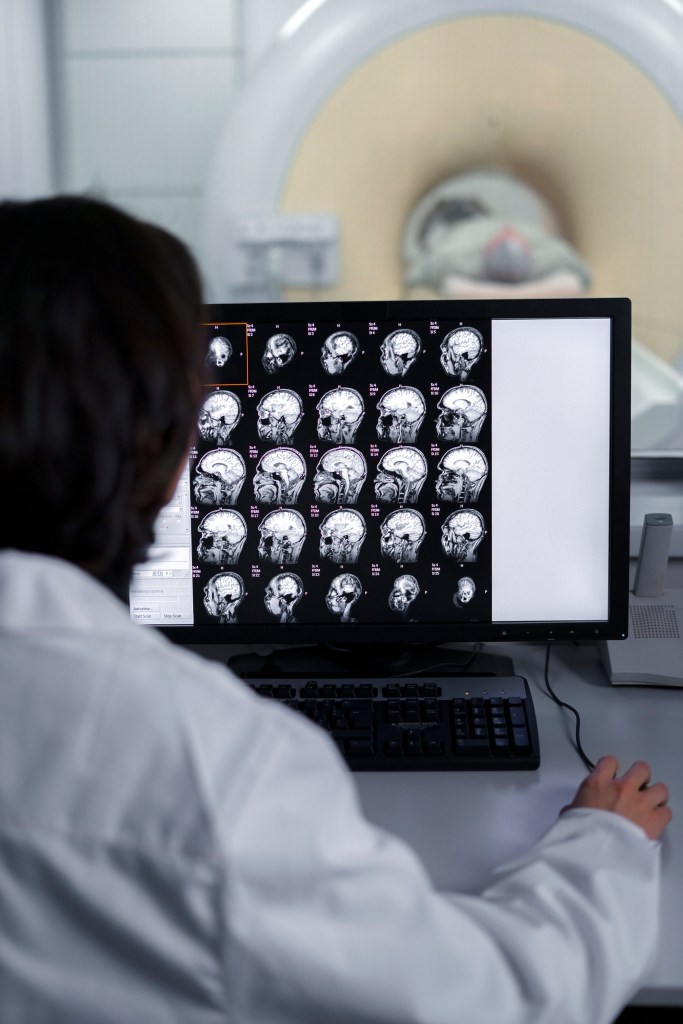
An important note for the XYY community: In addition to the clinical data presented at the workshop, Raznahan’s contribution published in 2015 in the Journal of Neuroscience remains fundamental. In that study, using neuroimaging, his team demonstrated that the presence of an extra Y chromosome induces permanent structural changes in the cerebral cortex, providing the “physical basis” for the observed symptoms.
The Biological Basis of Symptoms in 47,XYY
- Altered brain asymmetry: The human brain is naturally asymmetric, with functions such as language concentrated in one hemisphere. In 47,XYY, this asymmetry is disrupted.
- Changes in cortical thickness: Alterations have been observed in gray matter within regions crucial for language, communication, and social functioning.
This evidence shows that the social and communication difficulties often observed in 47,XYY have an objective cerebral cause and are not merely “behavioral.” The integration of the latest clinical data with the structural evidence from 2015 reinforces the need for neuropsychology-based treatments and supports, capable of intervening at both behavioral and biological levels.
📄 References:
Raznahan A, et al. Neuropsychiatric outcomes in XXY, XYY and Trisomy X: deep phenotyping study. Presentazione al 4th International Workshop on Klinefelter Syndrome and other sex chromosome aneuploidies, Padova 2025.
🔗 https://clinicaltrials.gov/study/NCT00001246 (studio NIMH di riferimento per i dati presentati al congresso)
Raznahan A, Lee Y, Reardon PK, et al. Cortical anatomy in human XYY syndrome: increased variability and decreased asymmetry. Journal of Neuroscience. 2015.
🔗 https://www.jneurosci.org/content/35/1/140
Dr. Sophie van Rijn – Genética y entorno familiar
Dr. Sophie van Rijn (Netherlands), in her article titled The Role of the Family Environment in Behavioral and Neurocognitive Phenotypes, explored a crucial concept: the interaction between genetics and environment (Nature vs. Nurture) in determining the final phenotype of an individual with sex chromosome aneuploidy (SCT).
Core of the research: evidence also applicable to 47,XYY
Jacobs syndrome (47,XYY) is a genetic condition that predisposes individuals to specific vulnerabilities, particularly in neurocognitive and social domains, such as language delays, difficulties in executive functioning, and social interactions. However, Dr. van Rijn emphasizes that genetics does not imply an immutable destiny. Her work demonstrates that the family environment acts as a powerful modulator: a stimulating, supportive, and well-informed context can help mitigate the risks associated with SCT, transforming the environment from a potential source of stress into a protective factor.
Clarification on sampling
It is important to note that Dr. van Rijn’s conclusions are based on studies conducted with a mixed sample of children with SCT (XXX, XXY, and XYY). The results are presented for the group as a whole, without separate analyses for each subtype. Therefore, it is fair to say that the evidence also applies to Jacobs syndrome, but it is not specific to this condition.
📄 Reference:
van Rijn S, Kuiper K, Swaab H. Beyond the Extra X and Y Chromosome: The Contribution of Familial Risk for Psychopathology to the Neurodevelopmental Phenotype of Children With Sex Chromosome Trisomy. American Journal of Medical Genetics Part A, 2025.
🔗 https://onlinelibrary.wiley.com/doi/full/10.1002/ajmg.a.64021
Direct implications for the association
This research reinforces our mission: early diagnosis alone is not sufficient; early intervention within the environment is also essential. Providing parents of children with Jacobs syndrome (47,XYY) with clear strategies, psychological support, and practical tools to create a structured, safe, and harmonious environment is critical to maximizing developmental potential and addressing all challenges.
The evidence confirms that investing in family support is a therapeutic intervention as important as the medical management of physical symptoms.
Endocrinology, Fertility, and Transition: Beyond Klinefelter, Attention Is Also Needed for Jacobs Syndrome (47,XYY)

During the congress, the thematic area “Endocrinology, Fertility, and Transition” was explored in depth by numerous international experts. However, the focus has been almost exclusively on Klinefelter syndrome (47,XXY), leaving other sex chromosome aneuploidies such as Jacobs syndrome (47,XYY) in the shadows—conditions that would merit an equally systematic endocrinological and andrological analysis.
Speakers contributing to the endocrinology and andrology field:
- Dr. Anders Juul (Denmark) addressed pubertal transition in Klinefelter syndrome, highlighting hormonal alterations and testosterone-related body changes.
- Dr. Joachim Wistuba (Germany) presented molecular and cellular data on testicular function in XXY animal models, with implications for infertility and hypogonadism.
- Dr. Emma B. Hasselholm (Denmark) illustrated testicular microvascular dysfunction in Klinefelter, suggesting a link to hypogonadism and infertility.
- Dr. Andrea Garolla (Italy) discussed fertility management in KS patients, emphasizing the importance of early diagnosis to improve sperm retrieval rates.
- Dr. Francesco Carlomagno (Italy) presented the experience of the KING group (Klinefelter ItaliaN Group), which coordinates more than 20 Italian clinical centers focused on KS.
- Dr. Jesper Just and Agnete Nørgaard Schou (Denmark) explored the effects of testosterone replacement therapy (TRT) on skeletal muscle and adipose tissue in KS patients, using advanced technologies such as single-nucleus RNA sequencing.
- Dr. Andrea Graziani and Dr. Giuseppe Grande (Italy) analyzed the impact of TRT on cardiometabolic parameters and the relevance of FSHB/FSHR polymorphisms in KS.
- Dr. Daniele Renda Livraghi (Italy) compared estradiol levels and the E2/TT ratio between KSKS-related hypogonadism and non-KS hypogonadism, debunking certain endocrinological stereotypes.
A clear gap for Jacobs syndrome (47,XYY)
Although Jacobs syndrome was mentioned in some sessions (e.g., epidemiology, neuropsychiatry, language development), no presentation specifically and systematically addressed endocrinological, andrological, or pubertal transition aspects in 47,XYY individuals.
However, clinical experience and literature indicate that males with 47,XYY may present:
- Alterations in spermatogenesis, with documented cases of azoospermia or oligozoospermia.
- Hormonal dysfunctions often overlooked, with possible implications for growth, virilization, and bone health.
- Difficulties in transitioning from adolescence to adulthood, frequently exacerbated by the lack of endocrinological management.
As highlighted in the joint intervention of our Italian and Spanish associations, the absence of structured clinical protocols for 47,XYY leads to delays in diagnosis and management, significantly impacting families’ quality of life.
Our proposal:
It is time to broaden the multidisciplinary approach to Jacobs syndrome, which should include:
- Targeted endocrinological and andrological studies
- Hormonal and fertility monitoring protocols
- Structured transition guidelines for XYY adolescents
- Training for healthcare professionals to help them recognize early signs
Only then can we ensure equitable care and truly comprehensive management for all sex chromosome aneuploidies.
Comorbidity and Epidemiology Area

The presentations highlighted the need for holistic, long-term monitoring of comorbidities.
Dr. Claus Gravholt – National Registries: Comorbidity Mapping in 47,XYY
The Comorbidity area was pivotal thanks to Prof. Claus Gravholt (Denmark). Prof. Gravholt is one of the leading figures in SCA research, and his lecture at the congress, The Role of TRT in Cardiometabolic Risk and Mortality and Aging with Klinefelter Syndrome and Bone Health, resonates far beyond Klinefelter syndrome. His work is based on a nationwide epidemiological approach that also has a decisive impact on understanding Jacobs syndrome (47,XYY).
Scientific evidence and the value of national registry studies:
Prof. Gravholt and his team are responsible for the largest and most comprehensive epidemiological study ever conducted on 47,XYY syndrome, using Danish national health registries.
A key finding for Jacobs syndrome (47,XYY):
This study was crucial because it overcame outdated and fragmented knowledge, providing for the first time a complete picture of comorbidities and long-term health risks associated with 47,XYY. Detailed analysis of data from thousands of individuals confirmed that the syndrome is not an isolated condition but is associated with an increased risk of specific diseases that require systematic monitoring:
Neuropsychiatric and Neurodevelopmental Disorders (highest relevance area)
The most frequently diagnosed problems requiring early and targeted intervention include:
- Attention Deficit Hyperactivity Disorder (ADHD): significantly increased risk.
- Autism Spectrum Disorders (ASD): markedly higher risk.
- Intellectual disability/mental retardation: HR >3.
- Schizophrenia and psychotic disorders.
- Epilepsy and seizures.
Endocrine and Reproductive Disorders
Although hypergonadotropic hypogonadism is often less pronounced than in 47,XXY, abnormalities are observed:
- Hypogonadism: less frequent and severe than in 47,XXY, but sometimes present and requiring attention
- Male infertility: significantly increased problems compared to XY population, consistent with oligo/azoospermia described in recent literature
- Precocious or delayed puberty: anomalies in pubertal development have been observed
Vascular and Cardiometabolic Diseases
These risks increase with age, making long-term prevention crucial:
- Hypertension (high blood pressure)
- Venous thromboembolism (VTE): risk of blood clots, though lower than in 47,XXY
- Type 2 diabetes mellitus
- Obesity
- Dyslipidemia (abnormal cholesterol and triglyceride levels)
- Cardiovascular disease: overall increased risk
Connective Tissue and Autoimmune Diseases
This category underscores the multisystemic nature of the syndrome:
- Autoimmune diseases: overall increased risk, though less pronounced than in XXY
- Joint and connective tissue problems: such as arthritis
Gastrointestinal and Urological Disorders
- Urological malformations: congenital anomalies affecting the urinary system
- Gastrointestinal diseases
The complete list demonstrates how the extra Y chromosome affects the body, making the Diagnostic Therapeutic Care Pathway (PDTA) model proposed by the Associations an urgent clinical and social priority to ensure longevity and quality of life for individuals with 47,XYY.
📄 References:
Berglund A, Stochholm K, Gravholt CH. Morbidity in 47,XYY syndrome: a nationwide epidemiological study of hospital diagnoses and medication use. Genet Med. 2020;
🔗 https://pubmed.ncbi.nlm.nih.gov/32475987/
Dr. Angela Lucas-Herald – Vascular Aging and Hypogonadism
Dr. Angela Lucas-Herald (UK), in her presentation Vascular Ageing in Conditions Associated With Early Onset Hypogonadism, emphasized the importance of monitoring cardiovascular risk in SCA related to hypogonadism.
📄 References:
Lucas-Herald AK, et al. Eur Heart J. 2022;
🔗 https://academic.oup.com/eurheartj/article/43/19/1832/6549830
Dr. Francesco Costantino – Prevalence of KS and Underdiagnosis of SCA
Dr. Francesco Costantino (Italy), with his Gold Oral Presentation on the prevalence of Klinefelter syndrome, raised the issue of underdiagnosis of SCA—an endemic problem also for 47,XYY.
📄 References:
Costantino F, et al. Endocrine Abstracts. 2024;
🔗 https://www.endocrine-abstracts.org/ea/0099/ea0099ep359
Dr. Alberto Ferlin – Early Diagnosis: Advantages and Perspectives
Finally, Prof. Alberto Ferlin (Italy) stressed the importance of age at diagnosis and the benefits of early detection, reiterating that only timely diagnosis—ideally neonatal—allows preventive intervention on potential neurodevelopmental delays, a concept central also for Jacobs syndrome.
Patient Voices and Social Impact

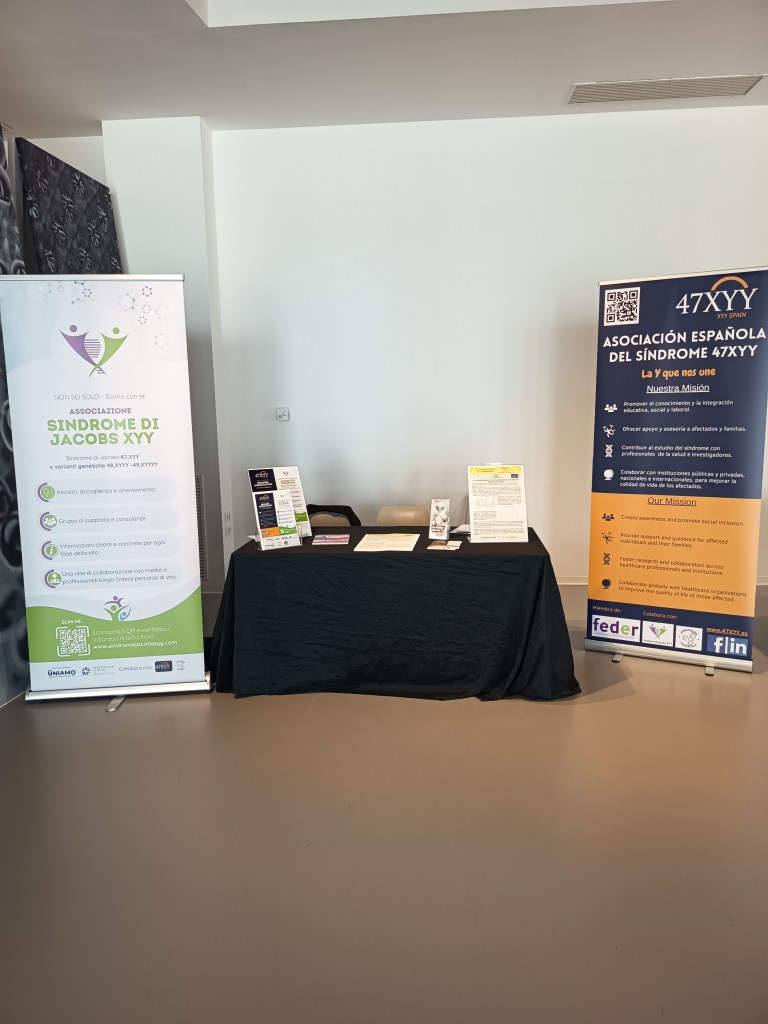
For the first time, Jacobs syndrome 47,XYY was not only mentioned but actively represented thanks to our poster “Jacobs Syndrome 47,XYY: From Patient Empowerment to Multidisciplinary Care to Close the Diagnostic and Care Gap” and the booth where both associations were present.
This work also sparked interest among clinicians, confirming that data collected by associations are essential for building new care models.
Both associations have formally requested that, at the next International Workshop, dedicated spaces be established specifically for Jacobs syndrome 47,XYY, including:
- Clinical-scientific plenary sessions
- Joint sessions between researchers, families, and health institutions
Our children, adolescents, and adults with XYY worldwide deserve expertise, protocols, and dignified healthcare.
Not out of pride, but out of necessity
Acknowledgments
We wish to express our recognition and gratitude to:
- The Scientific Committee and all researchers who participated in the congress for listening with respect and attention
- The patient associations present, with whom we share the same vision
- The physicians and researchers who collaborate with us every day
- The members of our associations, who help us take these steps forward
- The XYY Syndrome Association of Argentina and the XYY Syndrome Association of Australia Inc., for their commitment and international collaboration that strengthens our global network
- All those who have supported us, support us, and will continue to support us
If a chromosome can change a life, a network can change a destiny.
Contacts and Collaborations
We are open to scientific, clinical, and institutional collaborations.
📩 Official contacts:
- Italian Jacobs Syndrome XYY Association:
info@sindromejacobsxyy.com
- Spanish 47,XYY Syndrome Association:
47xyyspain@gmail.com
🌐 Websites / information channels:
- Italian Jacobs Syndrome XYY Association:
www.sindromejacobsxyy.com - Spanish 47,XYY Syndrome Association:
www.47xyy.es
Scopri di più da Associazione Sindrome di Jacobs XYY - APS
Abbonati per ricevere gli ultimi articoli inviati alla tua e-mail.

2 pensieri riguardo “Jacobs Syndrome 47,XYY – from patients to protagonists”
I commenti sono chiusi.